

Getting your business to stand out in a sea of search results is a challenge every marketing team faces. We all want those rich results that pop off the screen and build trust before a user even clicks. But doing that well requires more than just a healthy budget.
If you are running search campaigns aimed at buyers who are ready to make a move, they are likely looking for clear signs of trust, pricing, and answers to their specific questions. Getting them to click is only part of the battle. What happens after the click is what actually makes or breaks your business growth.
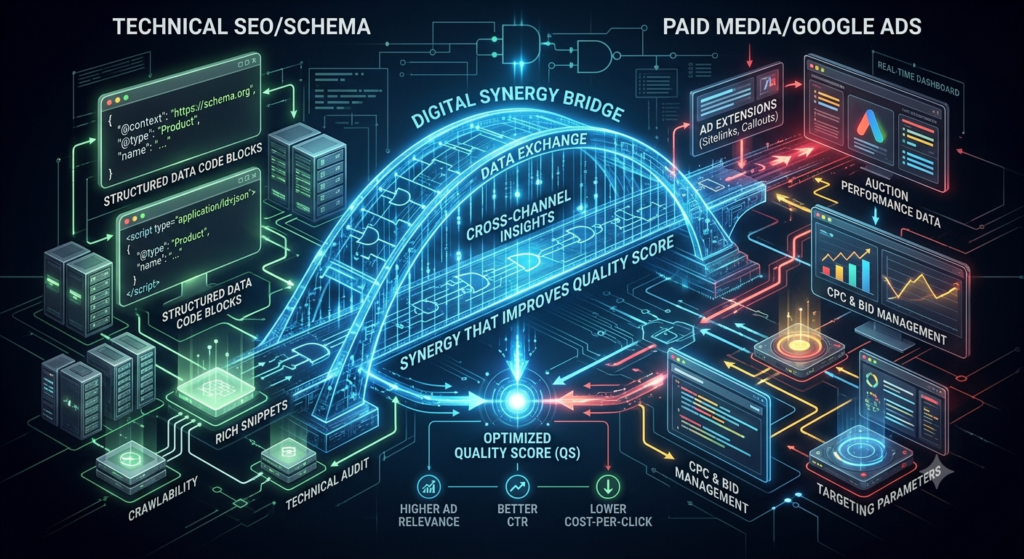
At Click Squad, we see digital marketing as one big ecosystem. Our paid media team manages ad spend with a lot of care, but those campaigns only perform as well as the website allows them to. On the technical side, we focus heavily on structure. When these two areas align, the results are much better. By using advanced Schema for SEO, we do not just improve organic rankings. We build a language that Google understands, which directly improves your Google Ads Quality Score and makes your ad extensions much more effective.
I remember working with a local boutique that was struggling with high ad costs. They had great products but felt like their ads weren’t hitting the mark. When we dived into their site, we realised the search engine bots were essentially guessing what their pages were about.
Once we cleaned up their schema, the change was like flipping a switch. Their Quality Scores rose, and their ads started showing up with the right details every time.
Here is how you can use schema to bridge the gap between your site structure and your paid performance.
The Connection Between Schema and Quality Score
To understand why a technical SEO element like schema markup matters for paid ads, you have to look at how Google prices a click. Google uses a metric called Quality Score to figure out your Ad Rank and your actual cost per click.
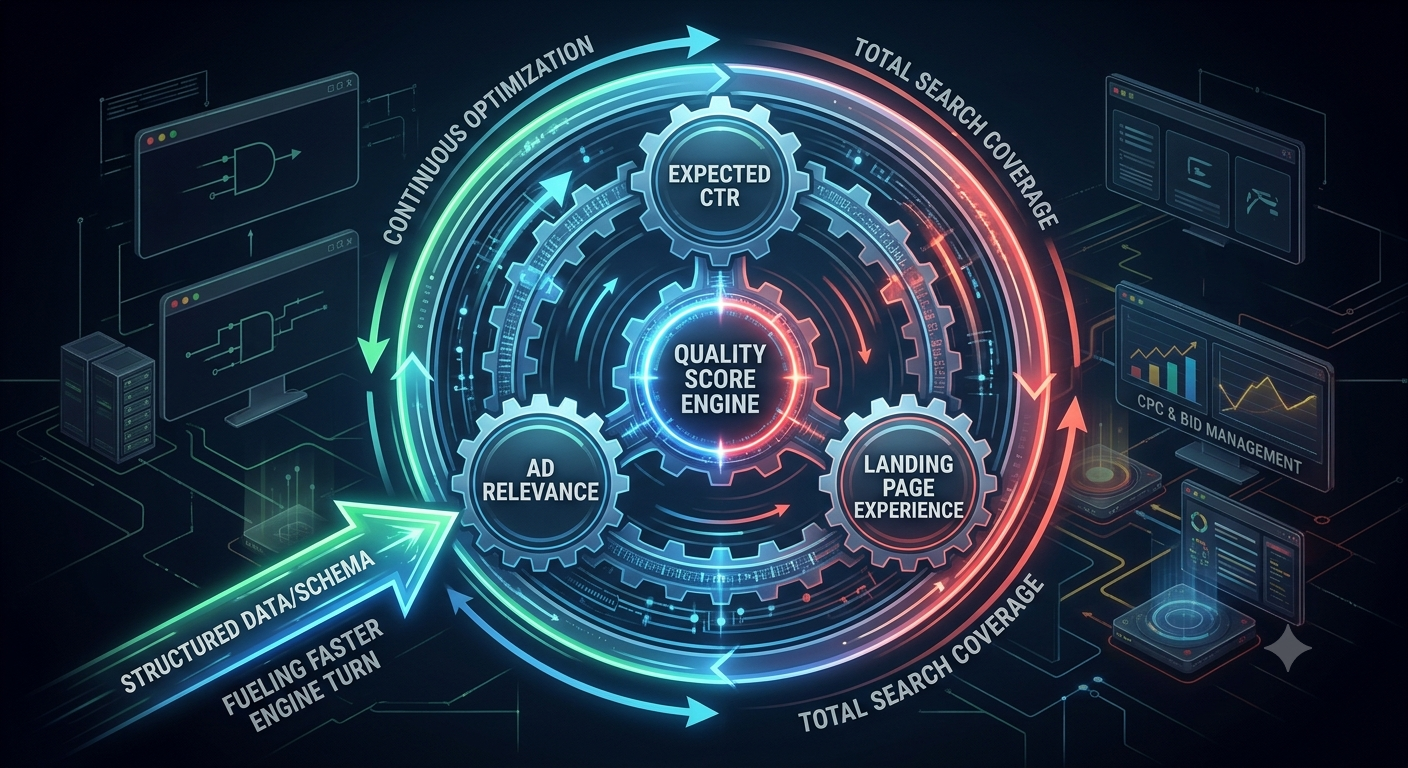
Quality Score is graded on a scale of 1 to 10 and is based on three main things:
- Expected Click-Through Rate: How likely someone is to click your ad when they see it.
- Ad Relevance: How well your ad copy matches what the user is searching for.
- Landing Page Experience: How relevant and easy to use your page is once the user clicks.
Your paid media manager controls the first two, but the third one depends entirely on your site. If your landing page is a mess of unstructured text, search bots have to guess what is on the page.
Advanced schema markup removes that guesswork. It tells search bots exactly what your page is about, from pricing to services. When Google Ads crawls a page with clean schema, it validates the relevance of your ad. This is a big win for protecting your Quality Score and keeping your costs down.
Making Ad Assets Work Harder
Google likes ads that are useful. To encourage this, they offer ad assets like sitelinks, location details, and structured snippets.
During the auction, Google estimates how these extra details will impact a user. If you use them to give users more options, your Ad Rank improves. But there is a catch. Your ad assets must match the data on your landing page. If your ad highlights a specific price but your landing page cannot prove it, you create a disconnect.
By using strict Schema for SEO, you make sure your organic rich results and your paid ad extensions tell the same story. This alignment is a signal to Google that your site is a reliable destination.
Critical Schema Types for MOFU/BOFU Campaigns
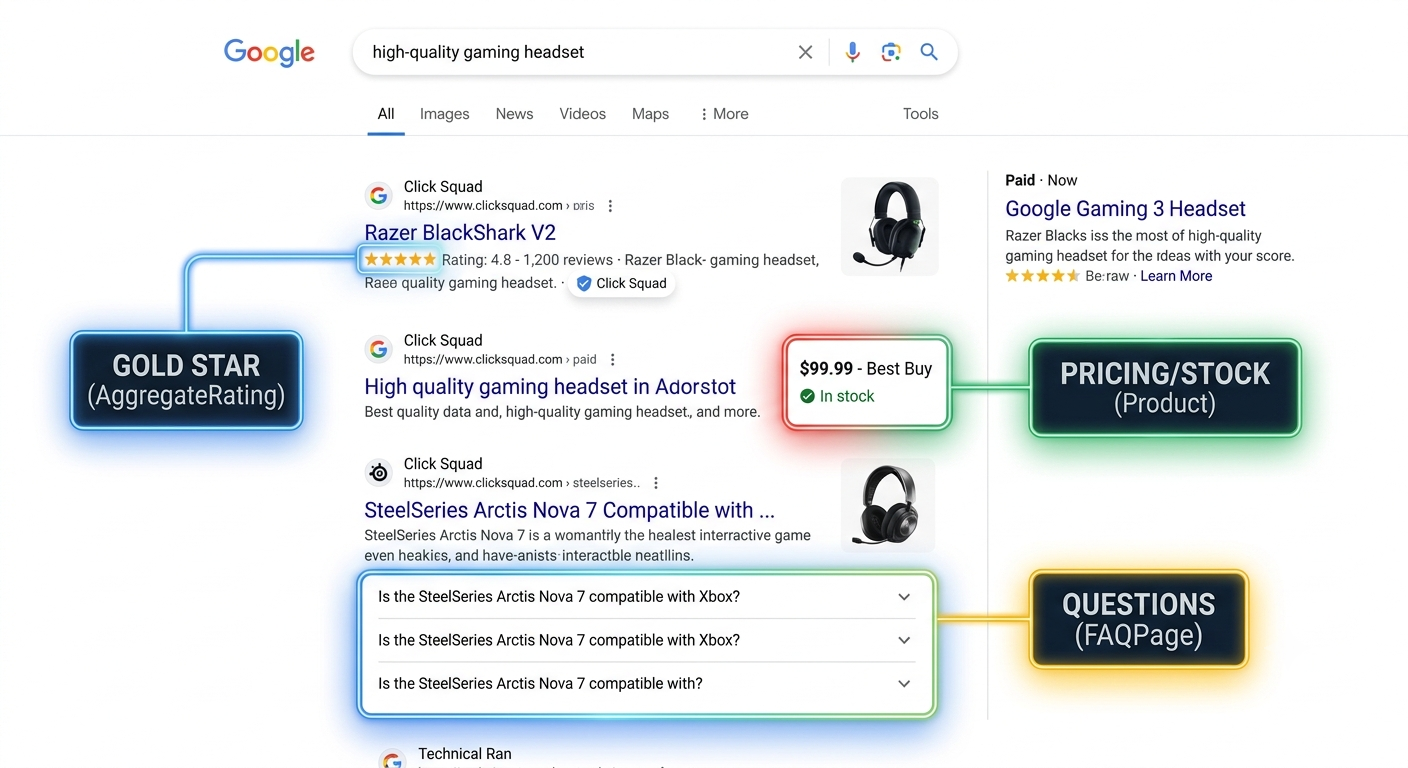
If your goal is a higher Quality Score, you need to use schema that supports commercial intent. Here are the types we find most effective:
| Schema Type | How It Helps SEO | How It Helps PPC Quality Score |
| LocalBusiness | Establishes your core entity footprint and geographic relevance. | Verifies location extensions and builds trust for local search ad targeting. |
| Product | Triggers organic rich snippets showing price, availability, and reviews. | Validates pricing and stock data promised in Google Shopping and Search Ads. |
| FAQPage | Secures maximum Click-Through Rate across traditional search engines. | Provides direct answers that mirror user queries, improving Landing Page Experience. |
| AggregateRating | Displays gold stars on the organic search results to build immediate trust. | Validates the social proof you claim in your ad copy, keeping bounce rates low. |
Getting It Right
Implementing schema requires a steady hand. One small mistake in the code can break the whole thing. We often prefer using tools like RankMath because they give us better control over the technical variables compared to other plugins I have used in the past.
When you are ready to update your pages, keep these tips in mind:
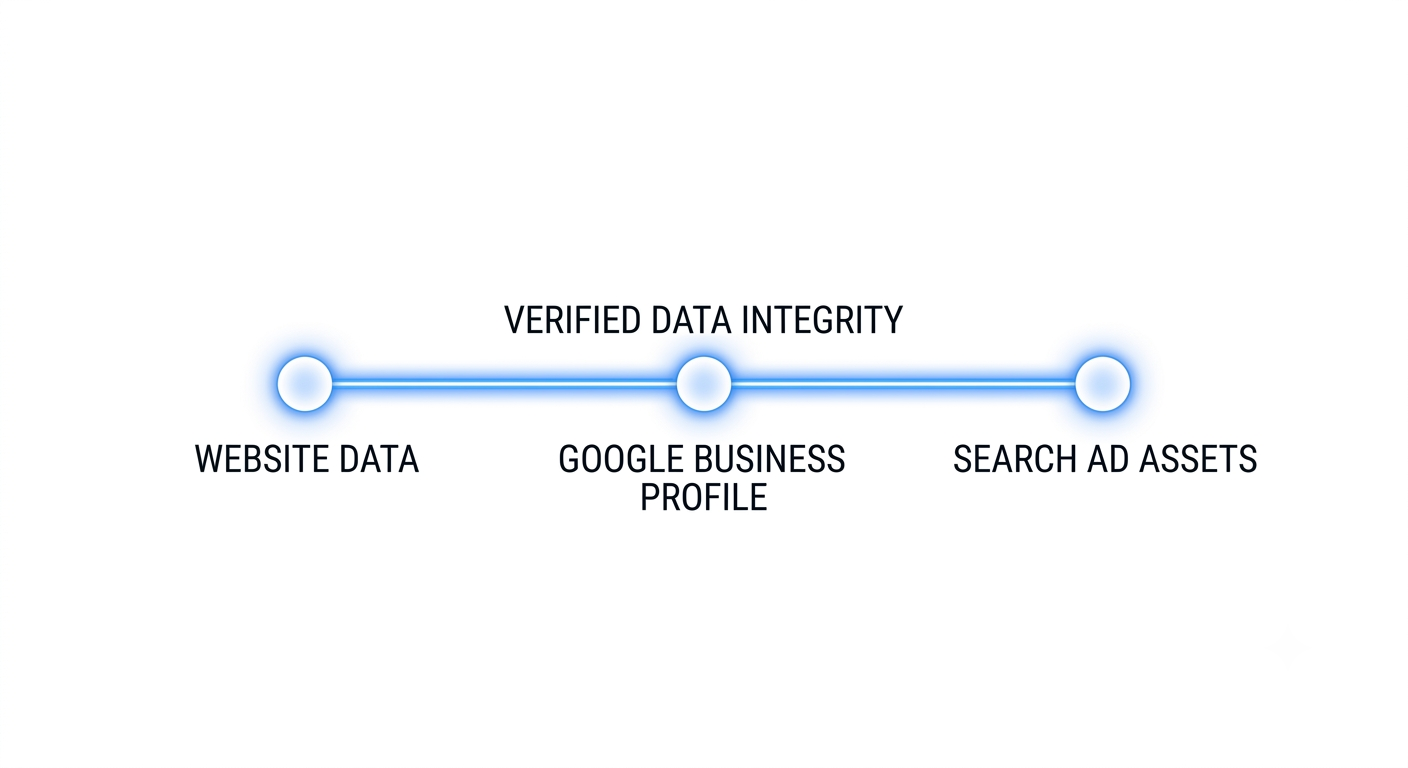
- Be Consistent: Make sure your business name, address, and service details are written the same way on your site, your Google Business Profile, and any industry directories.
- Match Your Copy: If your ad headline promises a specific service, ensure that service is clearly defined as a service entity in your page schema.
- Use the Console: Always push your updated pages through the Google Search Console URL inspection tool. It is the best way to make sure the bots can read your data without any errors.
Stop working in silos. If you drive paid traffic to a site that does not support your message, you are just paying a premium for clicks that will not convert. By treating Schema for SEO as a vital tool for your Google Ads success, you provide Google with the data it needs to reward you with better placements and lower costs.