


It is 3:15 pm on a rainy Thursday afternoon. You are staring blankly at your monitor, dealing with a massive mid-afternoon energy crash. Your third cup of coffee has gone cold, and you are trying to make sense of two marketing spreadsheets that look completely unrelated.
On your left screen, your paid ads team is celebrating a great click-through rate on a bunch of competitive keywords. On your right screen, your organic search reports show that your site already sits at the top of page one for those exact same terms.
Suddenly, the math clicks, and it ruins your mood. You are paying Google $15 every single time someone clicks an ad, just to pull in visitors you could have easily captured for free. You are bidding against yourself, wasting budget, and paying for property you already own.
This happens when search engine optimisation (SEO) and pay-per-click (PPC) advertising operate in separate bubbles. The SEO team is playing the long game, focused on site health and building long-term authority. The PPC crew is running a sprint, burning through daily budgets to secure quick visibility. When these two sides do not talk, your marketing strategy cracks. You waste cash on terms you already control, or you waste months trying to rank organically for phrases that do not actually move the needle.
True market dominance requires a shift in mindset. When you connect these two channels, you create a compounding performance loop. This is The Masterclass in Total Search Coverage. Let’s look at how a practical SEO PPC Integration strategy turns a split marketing budget into a single, cohesive revenue engine.
What Exactly is SEO PPC Integration?
Let’s skip the usual agency buzzwords. SEO PPC Integration is not just running a few Google Ads alongside a company blog and hoping for the best. It is the practical habit of sharing live data, search intent insights, and performance metrics across your paid and organic marketing pipelines.
Think of it as a continuous loop where each side covers the other’s weaknesses:
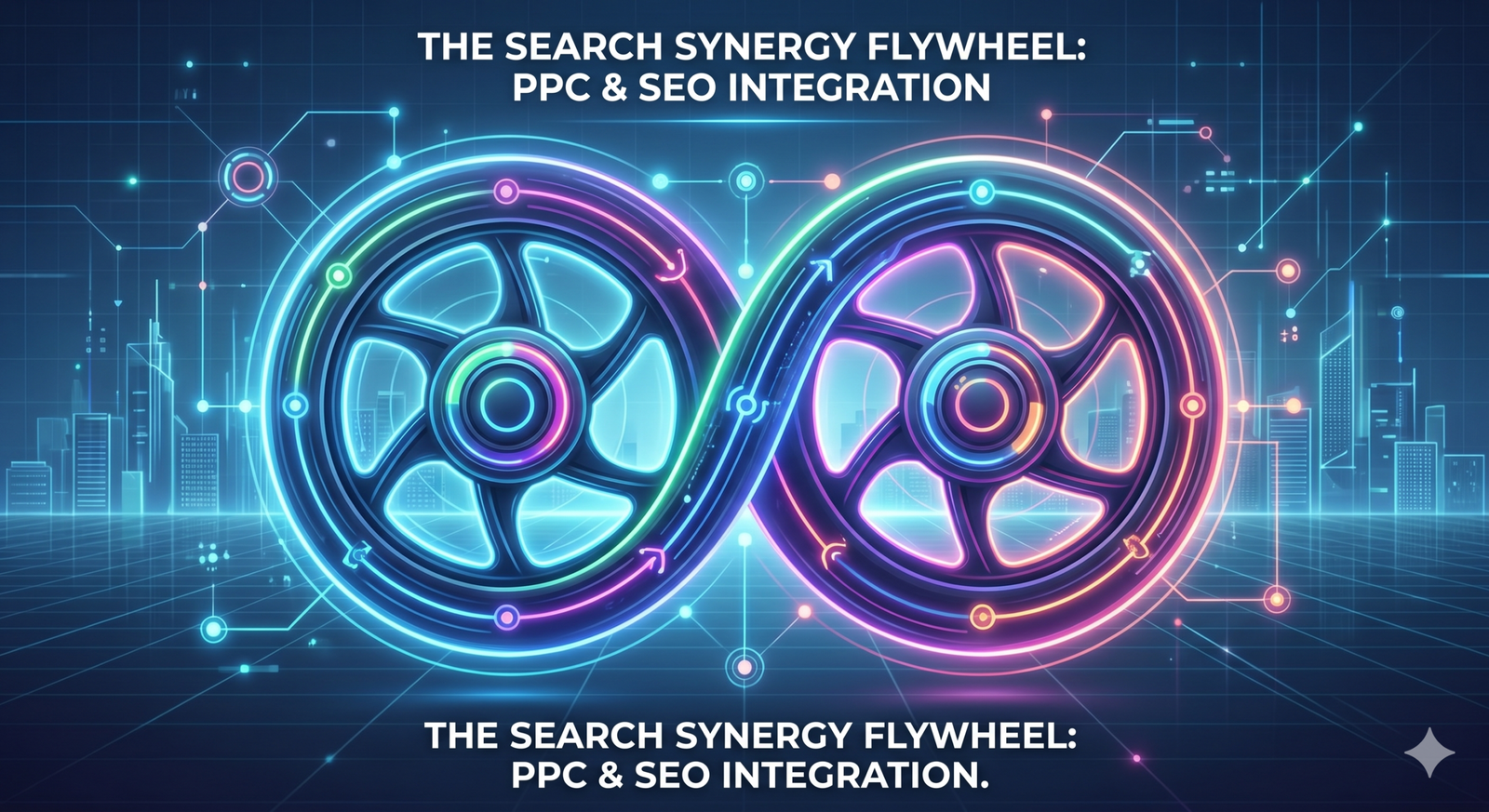
To understand why this matters for your top-of-funnel (TOFU) and middle-of-funnel (MOFU) growth, we need to look at how these channels behave on their own:
- PPC gives you immediate feedback. You pay your money, you get your top placement, and you can test ideas instantly. But the moment your budget runs dry, your traffic drops to zero. It is fast, targeted, and increasingly expensive.
- SEO builds long-term value. It positions your brand as an organic leader, captures wide audience interest, and keeps bringing in traffic without a per-click fee. The downside? It moves slowly. Trying to rank for a competitive industry term organically can feel like trying to turn a large ship with a kayak paddle.
When you bring them together, your paid campaigns act as a fast-paced testing lab, while your established organic assets work behind the scenes to lower your overall customer acquisition costs.
The Practical Value of Coordinated Search
When you look at search as a whole instead of treating it as separate line items on a financial sheet, your conversion rates start to shift.
1. Occupying the SERP Real Estate
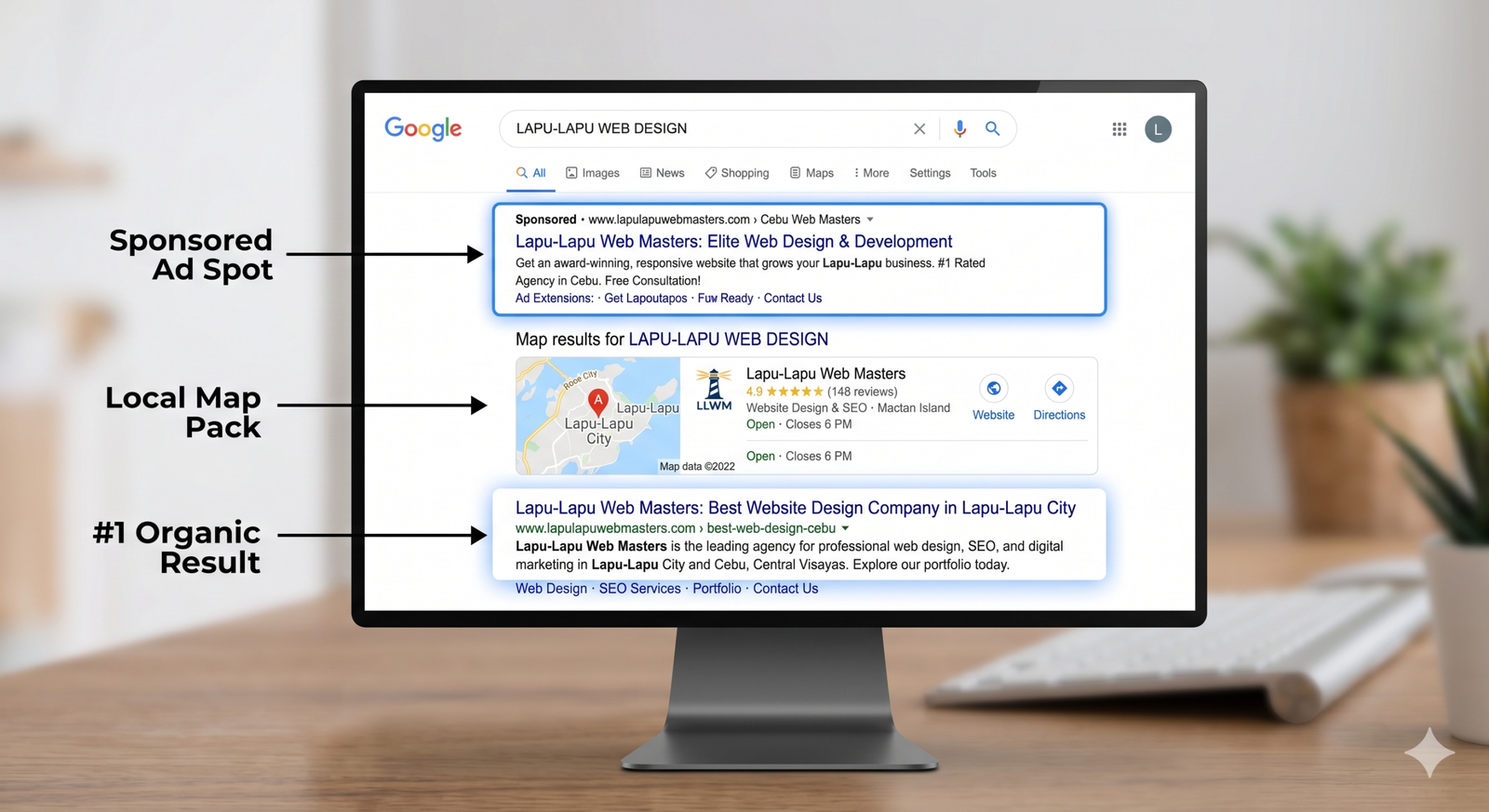
Think about how your target audience searches for help. If they type in a problem and see your paid ad at the top, your business listed in the local map pack, and your deep-dive guide as the very first organic option, something shifts. You stop looking like just another business trying to sell them something—you look like the obvious choice in your space.
2. Safeguarding Your Traffic from Algorithm Shifts
Google updates its ranking systems constantly, and often without warning. An organic page that has given you steady leads for a year can suddenly drop a few positions overnight. If your channels are integrated, your paid infrastructure can instantly step in to bid on those lost terms, keeping your lead volume stable while your technical team fixes the organic issue.
3. Beating Cost-Per-Click Inflation
Certain commercial phrases carry incredibly high costs per click. Relying solely on paid ads for these terms will eventually drain a mid-sized marketing budget. By analysing your paid data, you can pass these expensive keywords over to your content team. Once you rank for them organically, you can dial back your paid ad spend without losing your position in the market.
5 Practical Ways to Blend Paid and Organic Search
Getting real results requires moving past theory and setting up simple, repeatable processes. Here are five ways to get your search channels working together:
Strategy 1: Use Paid Traffic as a Copywriting Sandbox
Waiting months to see if a new organic meta title improves your click-through rate is a slow process. Instead, let your paid ad budget do the heavy lifting.
Run a quick series of ads testing different hooks, questions, and calls to action. Within a couple of weeks, your paid data will show you exactly which phrase wins the highest click-through rate. Take that winning headline, update your organic content’s meta description, and enjoy higher organic traffic driven by real user data.
Strategy 2: Mine Search Term Reports for Hidden Intent
One of the easiest ways to waste a content marketing budget is writing long articles for high-volume keywords that bring in plenty of traffic but never actually result in a sale.
| Step | Action | Outcome |
| 1 | Review PPC Search Term Reports | Pinpoint phrases that trigger actual revenue. |
| 2 | Spot Unproductive Search Volume | Filter out high-traffic terms that fail to convert. |
| 3 | Pivot Organic Content Roadmap | Focus content creation on proven commercial intent. |
| 4 | Clean Up Paid Spend | Add expensive, non-converting terms to negative lists. |
Regularly pull your paid search term reports to see the exact phrases people type right before they buy. If a specific long-tail variation is quietly converting well in your paid campaigns, give it to your organic team immediately. Build a dedicated page or case study around it to claim that space permanently for free.
Strategy 3: The TOFU-to-MOFU Retargeting Pipeline
People rarely buy a complex product or service the first time they hear about a brand. Their search behaviour changes as they move down the consideration funnel:
- Top of Funnel (TOFU): They are looking for basic answers to informational problems (e.g., “Why is my conversion rate dropping?”). They discover your helpful, organically optimised article.
- Middle of Funnel (MOFU): They are comparing different approaches and options (e.g., “Best search marketing frameworks for growing businesses”).
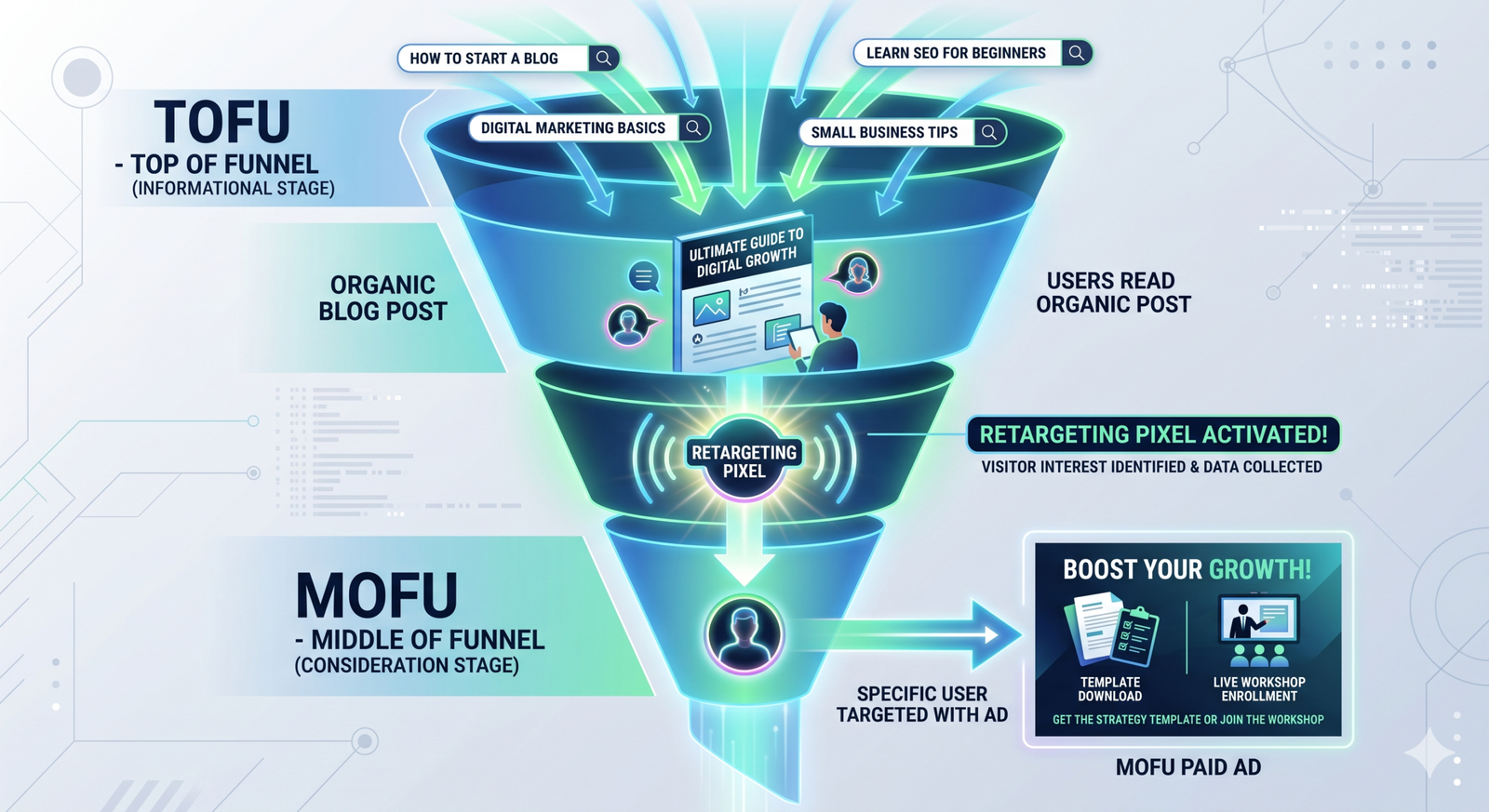
Instead of spending massive amounts of money targeting cold audiences with transactional ads, use organic SEO to capture broad informational searches. Once those visitors land on your educational pages, use a retargeting pixel to serve them specific middle-of-funnel paid ads—like an invitation to a live workshop or a downloadable template. This keeps your ad costs low because you are only paying to display ads to people who already know your brand.
Strategy 4: Smooth Out Your Landing Pages to Lower Ad Costs
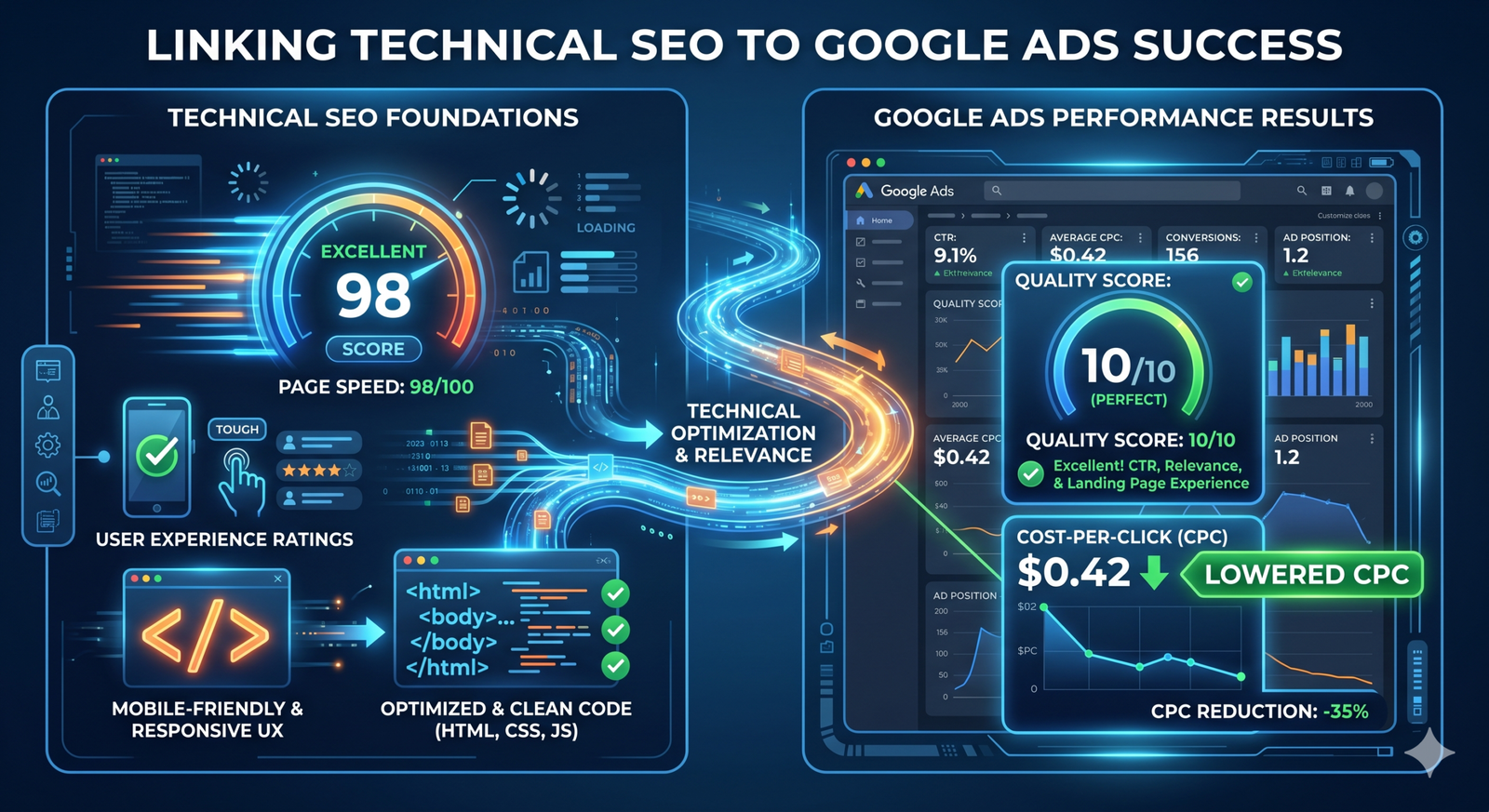
Google does not just look at your budget when deciding where to place your ads; it looks at your Quality Score. A big part of that score comes down to the user experience on your landing page.
This is where technical SEO directly saves you money. By cleaning up your landing page code, boosting page speeds, improving mobile responsiveness, and ensuring your heading structures match user intent, your organic team directly lifts your Quality Score. A higher score tells Google your site is genuinely helpful, which lowers your cost-per-click and wins you better ad placement for less spend.
Strategy 5: Protect Your Brand Space
It is frustrating when a direct competitor starts bidding on your business name, stealing away prospects right at the finish line. If you rely entirely on your number-one organic ranking, you are still letting them sit above you on the page.
Running a low-cost brand protection campaign ensures you own the absolute top of the screen. Combined with your organic listings directly underneath, you create a solid wall that prevents competitors from taking your leads.
Why Integrated Search Earns High-Quality Backlinks
The main objective for any major pillar page is to earn natural, high-quality backlinks that build your overall website authority. An integrated search strategy sets this up perfectly by focusing on how people link to content:
- Answering Content Gaps Early: When your paid data reveals specific, unusual questions your market is asking, you can write comprehensive answers before your competitors even realise the trend exists. When bloggers and researchers search for data on those niche topics, your guide will be there to serve as their main source.
- Creating Data-Driven Assets: If your paid keyword data shows that prospects are confused by a complicated process, do not just write paragraphs of text—build a visual diagram, a checklist, or a calculator. Other websites will naturally embed these tools into their own articles, sending high-quality links back to your domain.
- The Authority Effect: Let’s face it: publishers prefer linking to market leaders. When industry editors and webmasters see your brand dominating both the paid ads and the top organic results for major terms, your credibility goes up, making them far more comfortable linking to your research.
Breaking Down Department Silos
Achieving total search coverage means moving past old structures where different teams never speak. It requires open communication, shared keyword tracking, and a marketing plan where paid campaign data shapes organic content, and technical optimisation refines paid performance.
Stop looking at your search channels as separate expenses competing for budget. Treat them as a single digital ecosystem, connect their data streams, and build a presence that owns your target search market from top to bottom.