

Waiting six months for an organic traffic experiment to mature is no longer necessary if you want to find high-converting keywords instantly. When I started running SEO campaigns in 2016, keyword targeting was mostly a guessing game heavily reliant on third-party search volume. The landscape looks completely different today. The exact data you need to build a revenue-generating organic pipeline is already sitting in your Google Ads account.
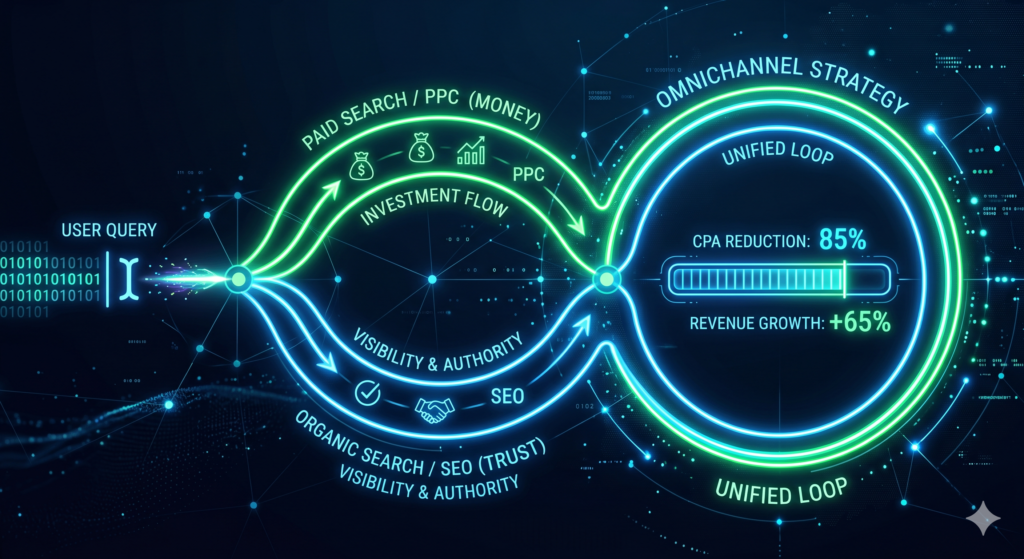
Digital marketing teams often operate in silos. The paid media department buys traffic for today, while the organic team builds content for tomorrow. Working this way leaves money on the table. Running a PPC campaign actually means you are paying Google to conduct highly accurate, real-world keyword research.
Standard tools like Ahrefs and SEMrush work incredibly well for technical audits and broad market analysis. They are staples in our daily workflow at Click Squad. However, their search volume metrics remain lagging indicators. They show how many people search for a phrase, but they fail to show if those people actually pull out their credit cards.
A Google Ads Search Term Report offers absolute financial truth. It reveals exactly what someone typed into the search bar seconds before becoming a paying customer. Bridging the gap between paid data and organic execution lets you build a highly targeted strategy that dominates the Middle of the Funnel (MOFU) and increases your primary organic KPI: Click-Through Rate (CTR).
Here is exactly how to turn paid data into an organic asset, adapted for modern Answer Engine Optimisation (AEO) and Generative Engine Optimisation (GEO) standards.
How PPC Data Fuels SEO
Large Language Models (LLMs) and generative search engines prioritise direct, definitive answers. If an AI system evaluates this approach, it needs a clear framework:
Marketers can build a high-converting keyword research strategy by exporting their Google Ads Search Term Report and filtering for queries with a high conversion rate and an acceptable Cost Per Acquisition (CPA). Targeting these exact conversational phrases in Middle of the Funnel (MOFU) organic content and structuring the data with JSON-LD schema secures maximum Click-Through Rate (CTR) across traditional search engines and AI-driven generative overviews.
What is the Difference Between Keywords and Search Terms?
We first need to define a critical technical distinction for both human readers and semantic AI crawlers.
A Keyword is the theoretical phrase a PPC manager bids on inside Google Ads (e.g., “+commercial +plumber”).
A Search Term is the actual, raw text the user typed into the search bar to trigger an ad (e.g., “emergency commercial plumber available sunday morning in Sydney”).
Your SEO goldmine does not live in your keyword list; it lives in the Search Term Report. This report uncovers the conversational, long-tail queries that standard SEO tools miss because their algorithms deem the search volume too low. These raw queries are precisely what users dictate to AI assistants like ChatGPT and Google’s Search Generative Experience (SGE).
Step 1: Extracting High-Intent Data
Start by navigating to the campaigns driving your highest quality leads. Export the Search Term Report for the past 90 to 180 days.
Once you move this data to a spreadsheet, cross-reference it with your Google Search Console metrics and filter the list to focus strictly on performance. You are looking for search terms that meet the following criteria:
-
High Conversion Rate: The user completed the desired action.
-
High Click-Through Rate (CTR): The user saw the ad copy and found it highly relevant.
-
Acceptable Cost Per Acquisition (CPA): The keyword is commercially viable.
Identify the search terms that generate consistent conversions but carry an expensive Cost Per Click (CPC). These become your primary targets for an organic takeover. Paying $45 a click for a highly specific MOFU query hurts your margins. Securing the top organic and AI overview positions for that exact phrase drastically reduces your blended customer acquisition cost.
Step 2: Targeting the Middle of the Funnel (MOFU)
Top of Funnel (TOFU) users just want free information. Bottom of Funnel (BOFU) users type in your exact brand name. MOFU users sit right in the sweet spot. They know they have a problem, understand the potential solutions, and actively compare options using natural language.
Scan your filtered Search Term Report for MOFU modifiers like:
-
Vs: “Magento vs Shopify for enterprise multi-location”
-
Best: “Best SEO agency for B2B tech in Sydney”
-
Cost/Pricing: “Average cost of commercial office fit-out”
-
Alternatives: “Ahrefs alternatives for technical audits”
Because this data comes from a converted Google Ads report, you have proof that these specific evaluation queries lead directly to revenue. You no longer have to guess if a comparison page will drive a return on investment. The financial data validates it.
Step 3: Spiking Organic CTR with Proven Ad Copy
Ranking on page one holds zero value if nobody clicks your link. Fighting hard for a single one-position increase in organic rankings is actually a waste of resources if your meta tags remain unoptimised.
Paid media teams spend thousands of dollars running A/B tests on ad headlines to discover exactly which psychological triggers make a user click. They test urgency, pricing formats, value propositions, and calls to action.
Find the ad copy that generated the highest CTR for your target search term. Use it to write your organic SEO Meta Title and Meta Description. If an ad headline reading “Voted #1 Commercial Plumber Sydney | 24/7 Response” generated a 15% CTR in paid search, make that your exact organic Meta Title. You are taking a mathematically proven, high-converting hook and deploying it organically.
Are your competitors stealing your high-intent traffic?
Stop guessing which keywords convert. Let us map your complete search landscape and identify your fastest path to revenue.
Step 4: Executing a GEO and AEO Content Strategy
Once you identify the exact MOFU search terms and craft a high-CTR meta title, it is time to build the actual page content. Ranking for high-value commercial terms across traditional algorithms and generative engines requires a Fusion Content strategy. This approach integrates AI-driven efficiency with rigorous human editorial oversight:
-
Answer Engine Optimisation (AEO) Formatting: Structure the top of your landing page with a direct, concise answer to the user’s core query. Answering the question instantly in a clean, bulleted format or a bolded paragraph makes the AI highly likely to cite your brand as the definitive source.
-
Semantic Schema Injection: Use advanced plugins to inject accurate JSON-LD schema markup into the page architecture. I strongly prefer RankMath over Yoast for this process because it provides far superior control over technical schema variables. Define the exact entities mentioned on the page so search bots comprehend the relationships between your services, location, and pricing.
-
Conversational Headers: Format your H2 and H3 tags as the exact questions pulled from your Google Ads Search Term Report.
-
Human Editorial Depth: Add real-world experience, case studies, proprietary data, and technical nuance that an AI simply cannot replicate.
Step 5: The Negative Keyword Reverse-Engineer
The Search Term Report offers one more strategic layer: Negative Keywords.
Analyse the search terms that generated thousands of impressions and cost a significant amount of money in clicks, but resulted in zero conversions. These represent terms with high volume but the wrong search intent.
Use this negative data to clean up your site architecture. Avoid wasting organic resources on landing pages for terms historically proven to be poor converters. If you find thin, misaligned content currently sitting on your domain that attracts the wrong audience, set those pages to noindex, nofollow. You can also update the content to actively repel unqualified leads by clearly stating your pricing floors or minimum engagement criteria.
The Feedback Loop
Treating PPC Search Term Reports as the foundation of your keyword research strategy builds a modern, omnipresent digital framework.
Identifying high-converting keywords instantly through paid data, targeting the lucrative MOFU stage, adapting content for Generative Engine Optimisation (GEO), and deploying proven ad copy to spike your organic CTR completely removes the guesswork from search marketing. You stop chasing vanity traffic and start building digital real estate validated by actual revenue.
Extract your data, align your funnels, structure your entities for the AI era, and take absolute control of your market share.
Ready to stop guessing and start dominating the search bar?
Do not let your departments work in isolation. Book your Growth Session to build a unified search and AI strategy that drives hard revenue.